The Philippines faces some of the highest electricity costs in Southeast Asia, making solar energy not just an environmental choice but a financial imperative. Yet installing solar panels on an unprepared building can lead to serious problems: backfeeding issues, equipment failures, and rejection of your net metering application.
The key to a successful solar transition isn’t just the panels themselves—it’s ensuring your facility is properly retrofitted to handle renewable energy integration. Without the right electrical infrastructure, your solar investment could become a costly liability rather than an asset.
Understanding Solar Retrofitting
Retrofitting bridges the gap between your existing electrical system and the demands of solar power generation. Unlike traditional buildings that only consume electricity from the grid, solar-equipped facilities generate power, creating bidirectional current flow that standard electrical systems weren’t designed to handle.
For facilities in the Philippines seeking net metering approval from MERALCO or provincial electric cooperatives, meeting Philippine Electrical Code (PEC) standards isn’t optional—it’s mandatory. Here’s what your facility needs.
The Essential Retrofitting Checklist
1. Electrical Panel and Switchgear Upgrades
Most commercial buildings in the Philippines were designed for one-way power consumption. Solar changes everything.
Transfer Switches — Manual Transfer Switches (MTS) and Automatic Transfer Switches (ATS) serve a critical safety function: they prevent your solar system from feeding power back into the grid during brownouts or outages. This “anti-islanding” protection is crucial for utility worker safety and is required for net metering approval.
As part of our services, we also conduct thorough inspection and assessment of your facility’s existing electrical system — evaluating whether your current setup can accommodate a solar integration or if an upgrade, or in some cases a full system replacement, may be necessary to ensure safe and compliant operation.
Busbar Capacity Assessment
The PEC requires that the combined rating of your main breaker and solar input breaker cannot exceed your busbar’s rated capacity. Many older panels need upgraded busbars to handle the additional load without overheating—a critical safety concern in our tropical climate.
Dedicated Solar Breakers
Your system requires properly labeled, dedicated breakers engineered with bidirectional capability — allowing current to flow both from the grid and from your solar array. This makes safe isolation of solar power during maintenance or emergencies possible, and unlike conventional electrical panels, these are specialized components designed specifically to handle the reversible nature of solar-integrated systems.
Bidirectional-Ready Equipment
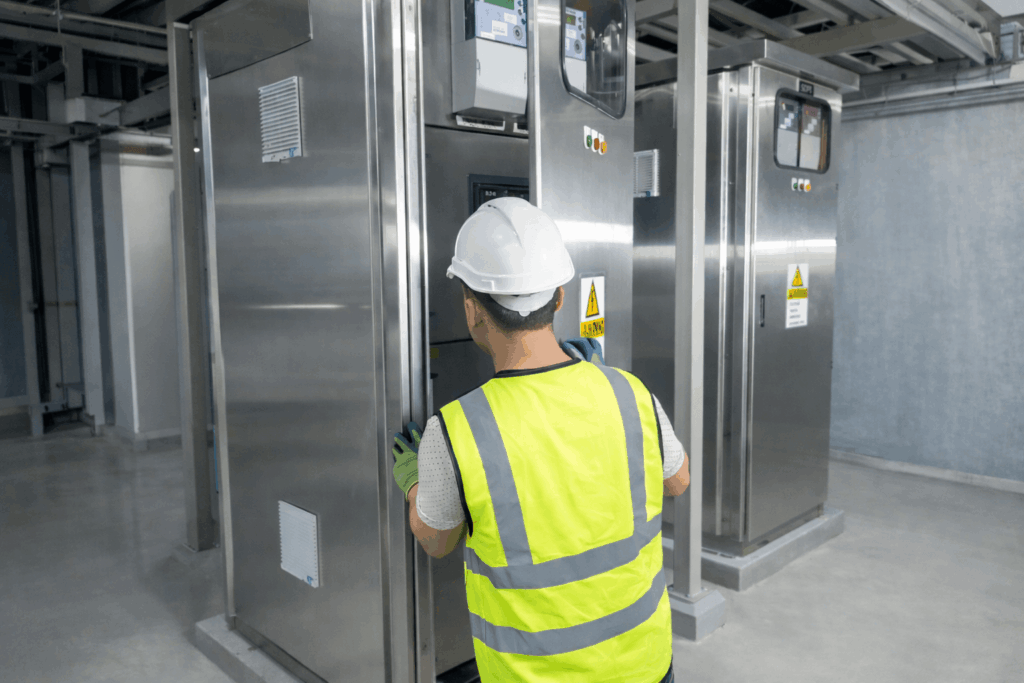
Low Voltage System Equipment equipped with net metering and engineered for solar projects — local manufacturers like GEMCOR specialize in custom Low Voltage Switchgear (LVSG) and panelboards designed to support seamless solar integration while meeting PEC compliance standards.
2. Structural and Environmental Considerations
The Philippines sits in the typhoon belt, subjecting buildings to extreme weather conditions that many solar installations worldwide never face.
Structural Reinforcement
A professional structural audit is non-negotiable. Your roof must support both the “dead load” (the weight of panels, mounting systems, and equipment) and the “wind load” during typhoon-force winds. Underestimating these forces has led to catastrophic failures during severe weather events.
Corrosion-Resistant Infrastructure
Our humid, coastal climate is particularly harsh on electrical components. Standard cable trays and conduits deteriorate rapidly in these conditions. Hot-dip galvanized cable trays and stainless steel materials are essential investments that protect your system for decades.
Weatherproof Cable Management
Proper cable routing and protection prevent water ingress, UV degradation, and maintain system integrity through years of monsoon rains and tropical heat.
How GEMCOR Supports Your Solar Transition
Solar retrofitting isn’t a one-size-fits-all solution. Philippine facilities face unique challenges—from grid characteristics to environmental conditions—that require localized expertise.
GEMCOR (Greenmetal Electric Manufacturing Corporation), based in Sta. Maria, Bulacan, exemplifies this localized approach. With a deep understanding of PEC requirements and Philippine grid conditions, GEMCOR fabricates custom electrical infrastructure specifically engineered for our market:
- Custom LVSG and Panelboards tested for high-demand industrial environments, complete with Net Metering for Solar Projects.
- AC and DC Cable Trays are designed to support and manage AC power distribution and DC system cables — keeping wiring organized, safely routed, and easily accessible for maintenance across industrial electrical systems.
- Cable Management Systems are designed to withstand Philippine weather extremes
Choosing a local manufacturer means faster support, easier replacement parts, and equipment designed with Philippine conditions in mind from the start—not adapted afterward.
Protect Your Solar Investment
Solar energy offers tremendous potential for Philippine businesses struggling with high electricity costs, but only if implemented correctly. Proper retrofitting transforms solar from a risky experiment into a reliable, compliant, and profitable investment.
Before signing any solar installation contract, ensure your facility undergoes a comprehensive retrofitting assessment. The upfront investment in proper electrical infrastructure, structural reinforcement, and safety systems will pay dividends in system performance, longevity, and peace of mind.
Ready to future-proof your facility? A properly retrofitted building isn’t just solar-ready—it’s positioned to adapt to whatever energy innovations come next.